
Key takeaways
- Start with satisfied past customers and define the jobs you want them to send.
- Choose an incentive based on job margins, then write down when it’s earned and paid.
- Give friends a direct way to contact you, and make the handoff part of your team’s closeout routine.
- Track qualified leads, estimates, booked jobs, costs, and revenue to judge whether the program pays off.
A customer loves the roof you just installed. Weeks later, their neighbor asks who did the work. Your customer shares your name, but the neighbor forgets it before calling.
A roofing referral program gives happy customers an easy way to recommend you. You decide who can refer someone, how they send the referral, and when you thank them. This turns word of mouth into a repeatable source of roofing leads you can follow through to booked jobs.
You can build a roofing referral program without an app. Here’s how to set up a process your team can use in seven steps.
1. Decide which jobs and customers you want to attract
Start with the roofing services you want more of. If your crew specializes in replacements, a flood of small gutter repairs won’t help. Pick the jobs, neighborhoods, and property types that fit your schedule and margins.
Write down what a good customer referral looks like. For example: someone in your service area who owns the property, needs a roof replacement, and expects to hire within three months. Your office can use that definition when someone submits a name.
Next, choose the customers you’ll invite first. Start with people whose roofing project is complete and who have said they’re happy with the work.
Set one modest goal for your first 90 days. You could aim for 10 qualified introductions and three booked estimates. Use your own job history to set the target; another roofer’s numbers won’t tell you what your team can handle.
2. Choose a reward you can afford to deliver
A reward can give customers a reason to remember your program. Your referral rewards program could offer a gift card, a check, or a donation to a local cause they choose. Pick one your team can explain in a sentence and send without a drawn-out approval process.
Don't forget to decide what specific action earns the reward. Paying for every name submitted can bring in people who never asked to hear from you. Paying after a completed job ties the expense to revenue, although the customer may wait longer.
A smaller thank-you for a completed estimate is another option if you can check lead quality first.
Work backward from the job economics. Say an average referred job brings in $4,000 after direct job costs, and you’re willing to spend up to $200 to acquire it. A $100 referral reward leaves another $100 for admin time and other costs tied to the program.
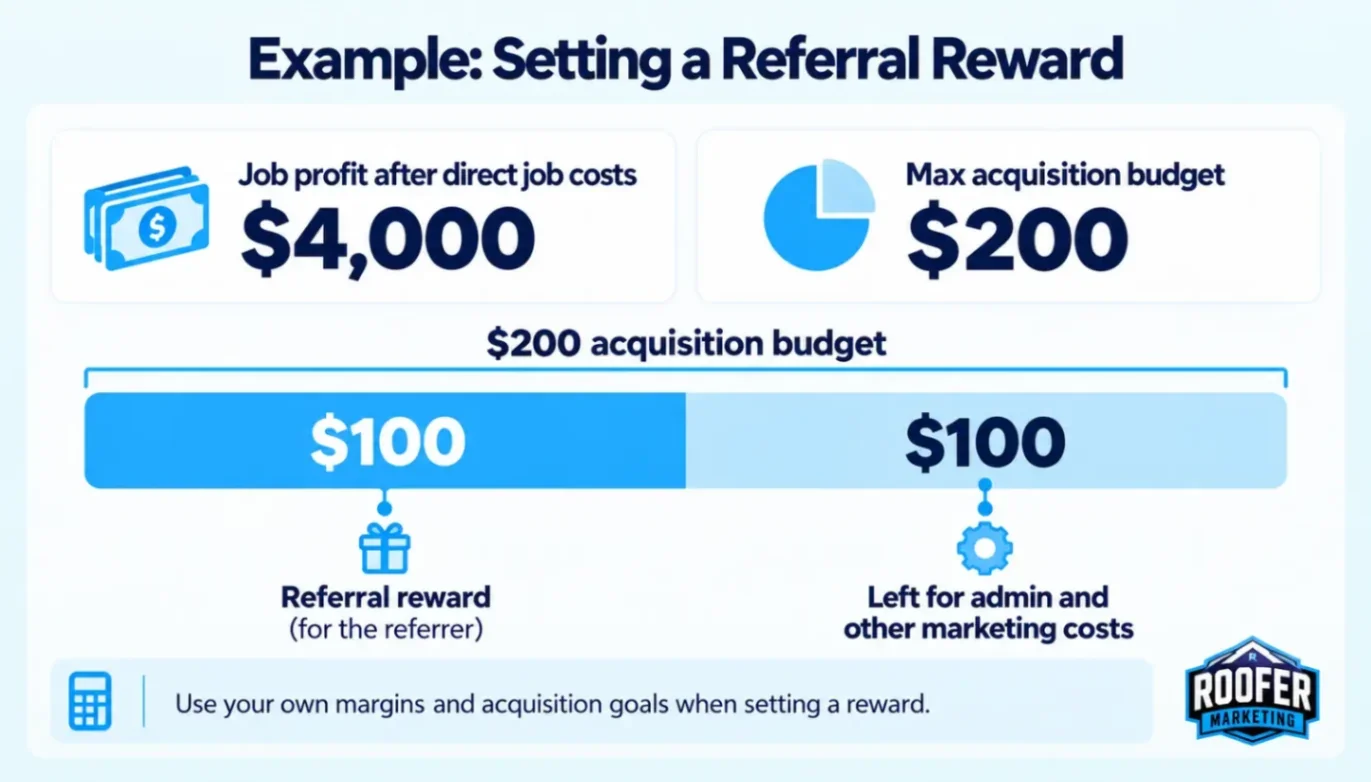
Those figures are an example, so use your own margins before setting an amount. Our guide to roofing job margins and overhead can help you work out what each job leaves for marketing.
If both people earn rewards, include both amounts in your budget. A new-customer discount also changes the job margin.
Keep referral rewards separate from online reviews. Google’s Business Profile review policy prohibits offering incentives in exchange for reviews. Payment for a referred job should never depend on posting, changing, or removing a review.
3. Write the rules before you ask for referrals
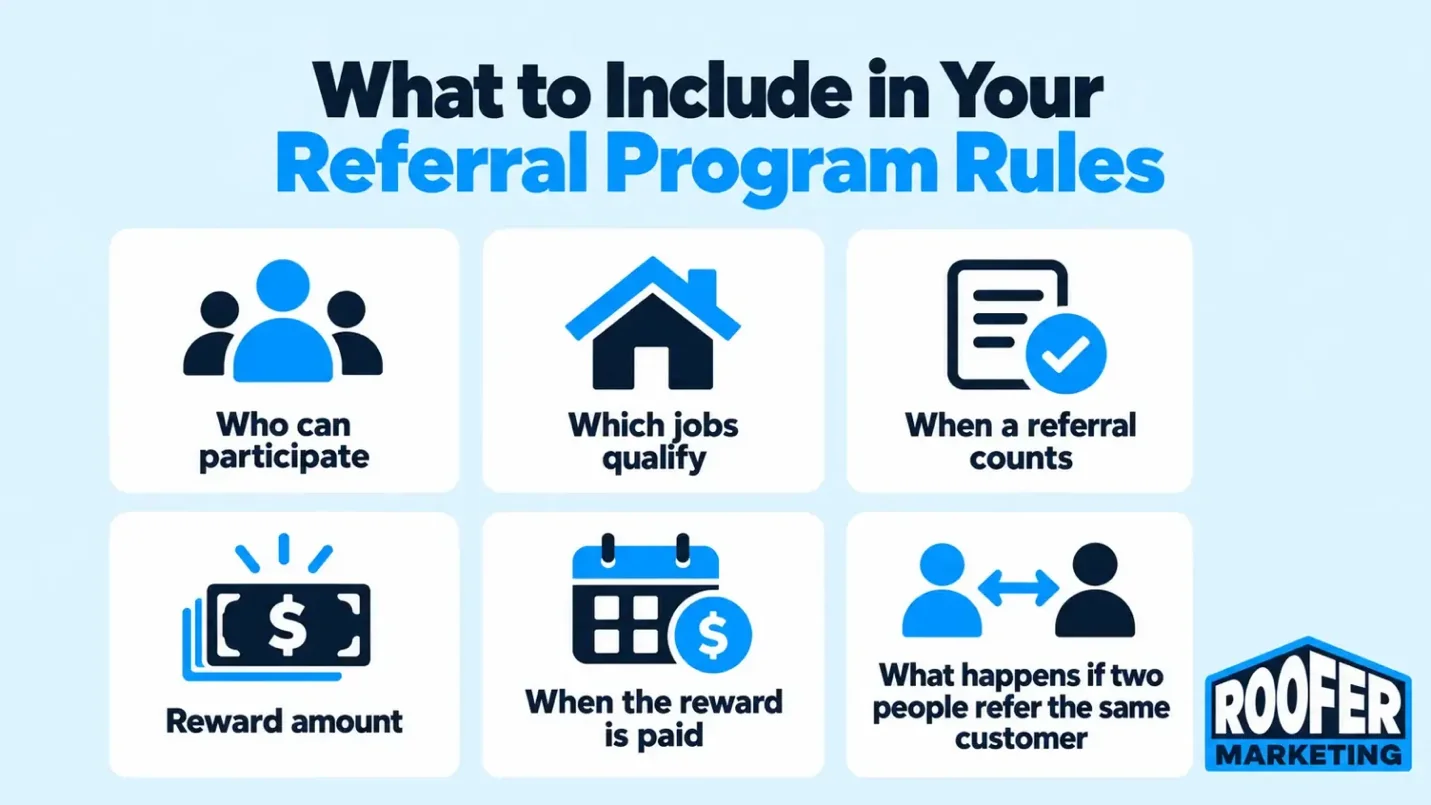
Put the offer in writing, even if it starts as a short page or handout. State who can take part, which jobs qualify, when a referral counts, the payment amount, and when it’s paid. Add what happens if two people refer the same person.
Here’s an example: A past replacement customer sends a neighbor your estimate link. The neighbor books, signs, and pays for a job, so your office sends the referrer $100.
If the neighbor was already in your pipeline, the introduction doesn’t qualify. Make sure to apply the same rules to everyone to remain fair.
Decide who can accept a payment. Rules for property managers, real estate agents, insurance professionals, and other partners may differ from rules for homeowners. Check applicable state and local requirements before offering those groups compensation.
If someone publicly recommends your company because they can earn a referral reward, ask them to clearly disclose that connection alongside their recommendation. The FTC’s guidance on endorsements explains when and how to disclose these connections.
4. Give people an easy way to refer someone
Choose a referral method that’s easy to use on a mobile phone. A referral form can ask for the referrer's name, the prospect’s name, contact details, service area, and roof issue. Let the customer say whether that person expects your call.
Better yet, give customers a link they can send to a friend. The referral can then book an inspection or request an estimate. That avoids putting a neighbor’s phone number into your system before the neighbor agrees to hear from you.
Your page should explain who qualifies, what the customer gets, when it arrives, and what the friend should do next. Put the link on your final invoice or thank-you email.
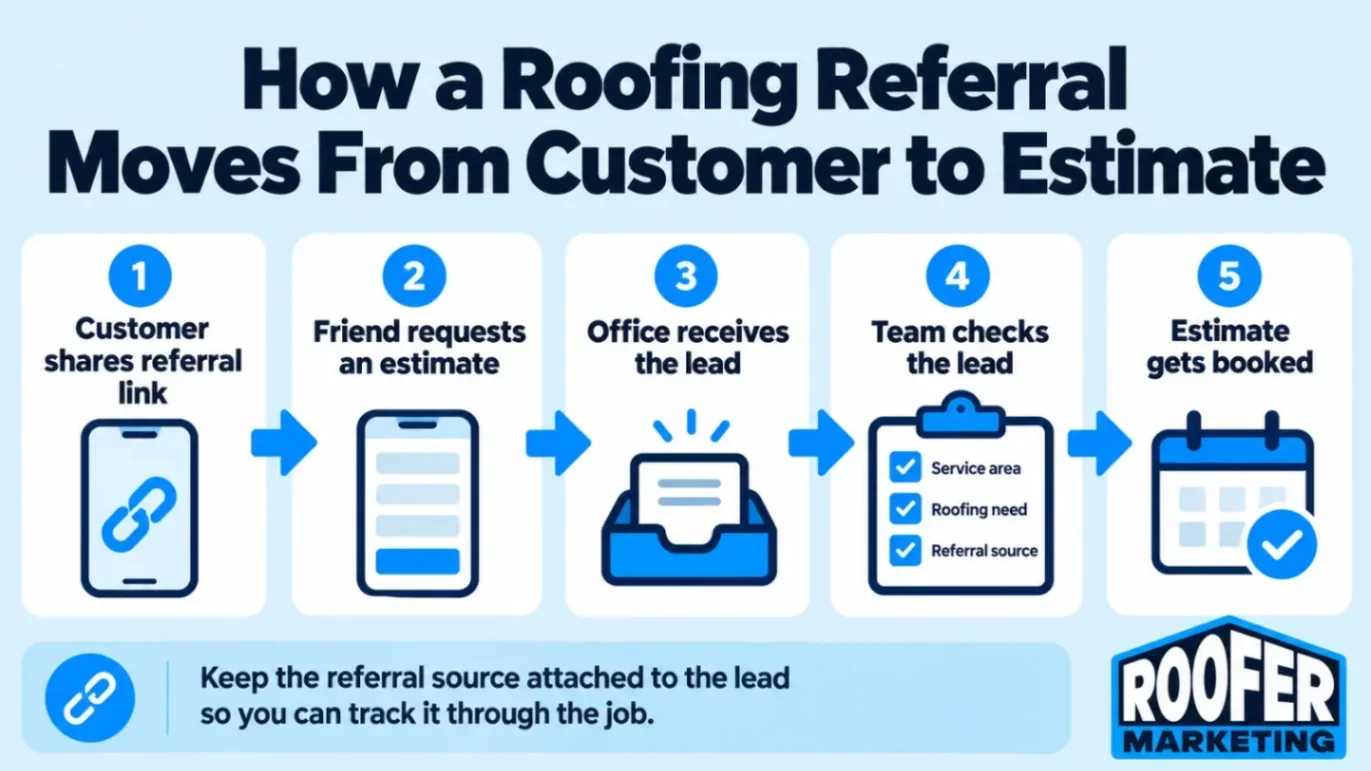
Give your office a backup method for phone introductions. When a caller says a past customer sent them, record the name and confirm the referral before booking an estimate. Add a field for referral sources to your lead log or CRM, so the detail doesn’t vanish in a call note.
Test the whole route yourself. Submit a referral via form, confirm the notification reaches your system, and check that a reply is sent. Fix any broken handoff before you tell customers about the program.
5. Ask after the job, then make the handoff easy
The right time to ask is after the customer has seen the finished work and had a chance to raise any concerns. You can build the ask into the closeout call or thank-you email. The customer experience comes first, so don’t ask while someone is still waiting on cleanup or paperwork.
Keep the request brief and specific. Your project manager could say:
“We’re glad you’re happy with the new roof. If a neighbor or friend needs a repair or replacement, you can send them this link. We’ll take it from there, and we’ll thank you if their job qualifies under the program."
Give the customer a sentence they can pass along without sounding like a salesperson. For example:
“This is the crew that replaced our roof. Here’s their estimate form if you’d like to talk with them.”
Include your service area and the kind of work you take on, so they don’t send a friend from three states away.
Your staff should know what happens next. The office confirms the lead, checks that it fits your service area, and contacts the prospect through the channel they chose. An introduction loses value when it sits in an inbox for days.
6. Launch with past customers and your team
Roofing companies can start with a small group of past customers. Send them a short note that explains the link, the kind of roofing work you’re taking, and the offer’s rules. A small launch helps you fix confusing wording before asking more customers to spread the word.
Generating referrals takes a repeatable ask. Show your office and project managers the same one-page instructions: when to mention the program, how to enter a referral, and who handles payment questions. Pick one person to own the log and payments, even if several people can accept leads.
Then add the link to places customers already see, like your post-job email, invoice, website, and printed leave-behind. Send social posts to the rules page. For other channels that can work alongside referrals, see our guide on how to promote a roofing business.
For promotional emails, review the FTC’s CAN-SPAM guidance for businesses. It covers sender information, subject lines, a mailing address, and a way to opt out. Use your normal customer email process and honor unsubscribe requests.
7. Track referrals through booked jobs and improve the process
Make a simple log with the date, referrer, referred customer, service needed, lead status, estimate date, job value, payment due, and payment sent. Record why a lead didn’t qualify. That keeps your team from paying twice or overlooking someone you promised to thank.
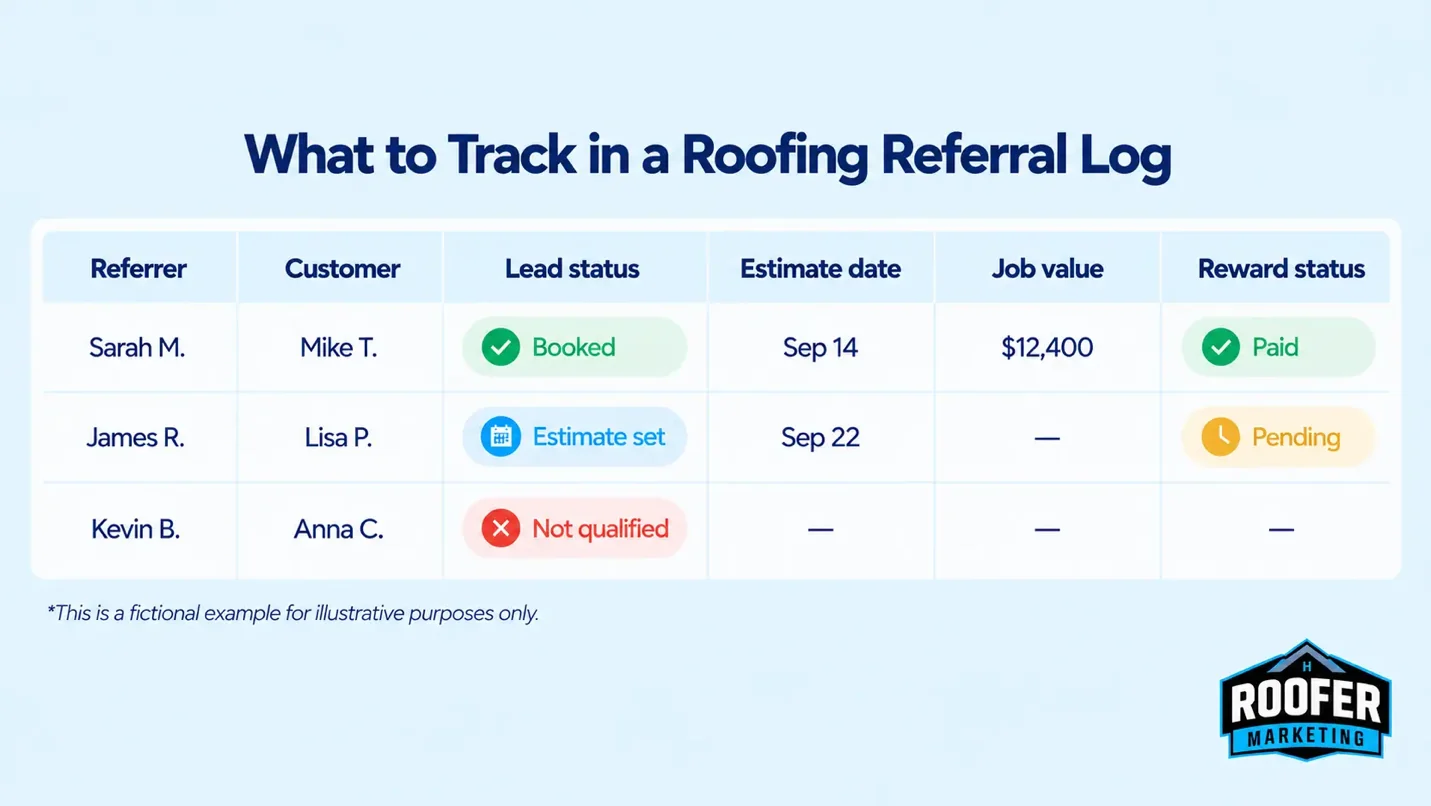
Track more than the number of names submitted. Look at qualified leads, booked estimates, signed jobs, completed jobs, and revenue. If you receive 20 names but only two people want estimates, your referral marketing message needs work.
Compare program and admin costs with the gross profit on completed jobs. For instance, five $100 payments cost $500 before staff time. If those jobs produced $8,000 in gross profit, you've got a starting point for judging the program.
Keep referral results separate from paid ad results so you can see what each channel brings in. Our guide to roofing advertising ideas covers other channels you can measure against referrals.
If customers share a website link, add campaign tags. Google Analytics’ guide to custom URLs shows how to label referral traffic. A tagged link can show visits and form fills; you’ll still need your lead log to connect a phone call, signed contract, and payment to the right person.
Review the log every month. Look for delays between submission and the first call, common reasons leads get turned away, and payments that haven’t been sent. Ask your office where the handoff gets stuck, then adjust one part of the program at a time.
Start with a small group and a repeatable routine
The program works when customers know how to introduce someone and your team knows what to do next. Set the job criteria, choose an offer that fits your margins, write the rules, and test the referral route before you launch.
Start with customers who know your work. Respond to their friends promptly, pay when jobs meet the rules, and use your job data to decide whether to expand.
If you want to track referrals for your business alongside other lead generation channels, contact our team at Roofer Marketing. We can help you tie introductions to estimates and booked jobs.
