
Key takeaways
- Google Search ads and pay-per-lead campaigns can reach homeowners who are already looking for roofing help.
- Project photos, customer testimonials, and storm-specific ads can build trust and generate local demand.
- Direct mail, retargeting, and referral programs help roofing companies reach people beyond active Google searches.
- Track qualified leads, booked inspections, estimates, and signed jobs to see which ideas deserve more budget.
Roofing leads rarely arrive at a steady pace. A storm can fill the calendar for weeks, while a dry month can leave crews waiting for work. Ad costs can also rise when several contractors target the same homeowners.
The right advertising mix helps you reach people before, during, and after they need a roofer. It also gives you more control over which services, ZIP codes, and job types you promote.
These 7 roofing advertising ideas cover several channels and can work for independent roofers and larger roofing companies. Choose the options that suit your services, budget, and coverage area. Each roofing marketing idea includes practical advice to help you put it into practice and track the results.
1. Run Google Search ads for high-intent roofing services
Google Ads can put your company in front of people who are already looking for roofing help. These roofing ads may appear near the top of the search engine results for “roof leak repair near me.” They may also appear when someone searches for a roof replacement contractor or emergency roofer.
Build separate campaigns or ad groups for your main services. Group roof repair and roof replacement by intent. Give commercial roofing, metal roofing, and storm damage their own ads and landing pages.
Keep your location settings within the areas your crews can serve. Google’s geographic targeting settings cover cities, ZIP codes, and radius targets.
Check the matched locations report each month. Exclude areas that spend money without producing qualified roofing leads or booked jobs.
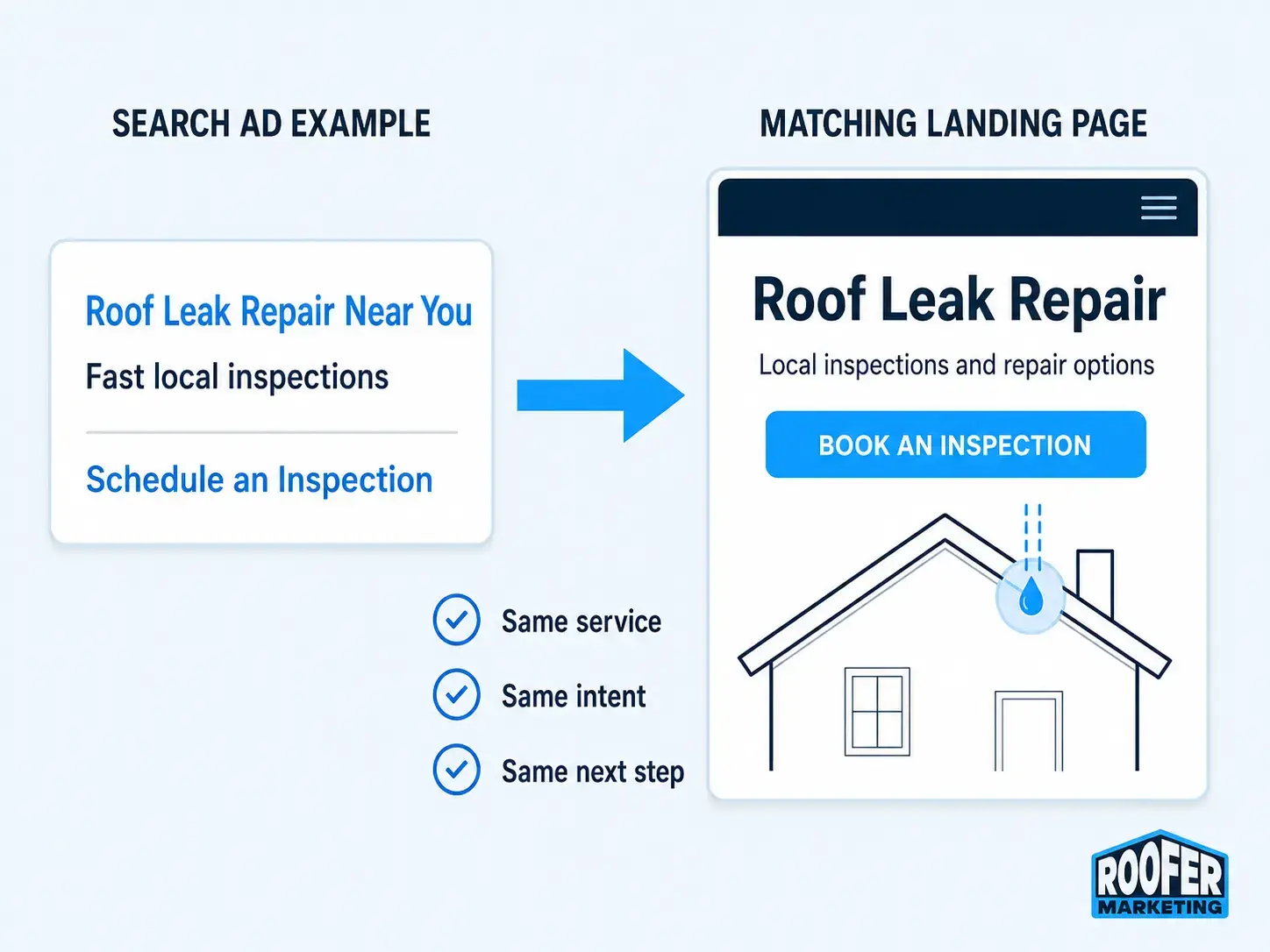
Your ad should match the reason behind the search. Someone with an active leak needs speed and availability.
Match the ad to the customer. Homeowners may compare several contractors based on response times, material options, financing, warranties, and help after a storm. Property managers often need quick quotes, regular updates, and a roofer who can work across several properties.
An ad for roof repairs could use this angle:
Stop a roof leak before the damage spreads. Schedule a local inspection. You'll get a fast response, a straightforward estimate, and repair options for your roof.
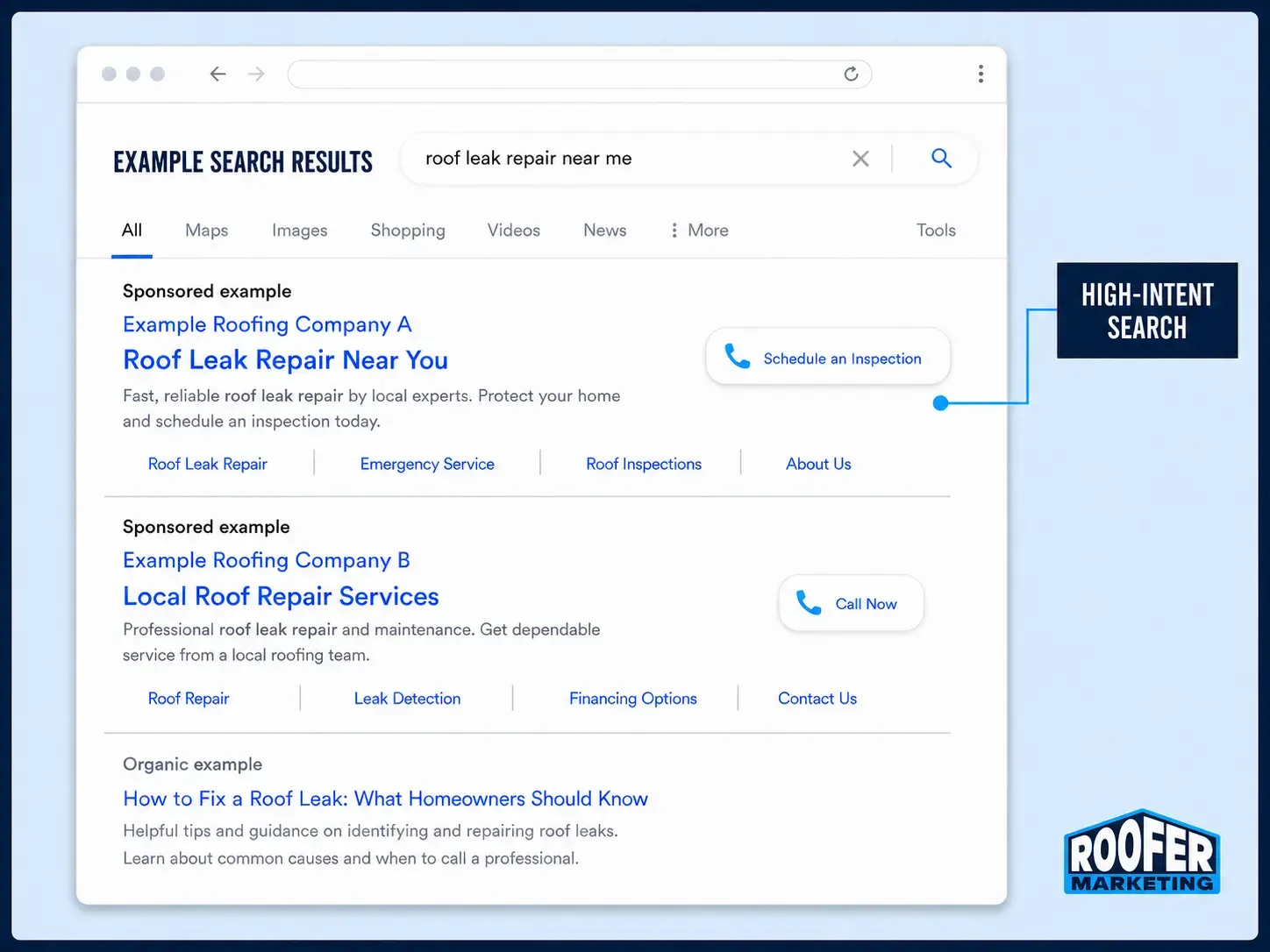
Send each ad to a page about that exact service. Add the service area, recent work, customer reviews, and any license details required in your state. You can also include financing terms and one main call to action.
Measure calls, forms, booked inspections, and signed jobs. Google’s call reporting feature can record call details and count calls that meet a chosen duration as conversions.
Paid search works best as part of a wider plan. Our guide on how to grow a roofing business covers some straightforward ways to book more jobs.
2. Use Local Services Ads to generate calls
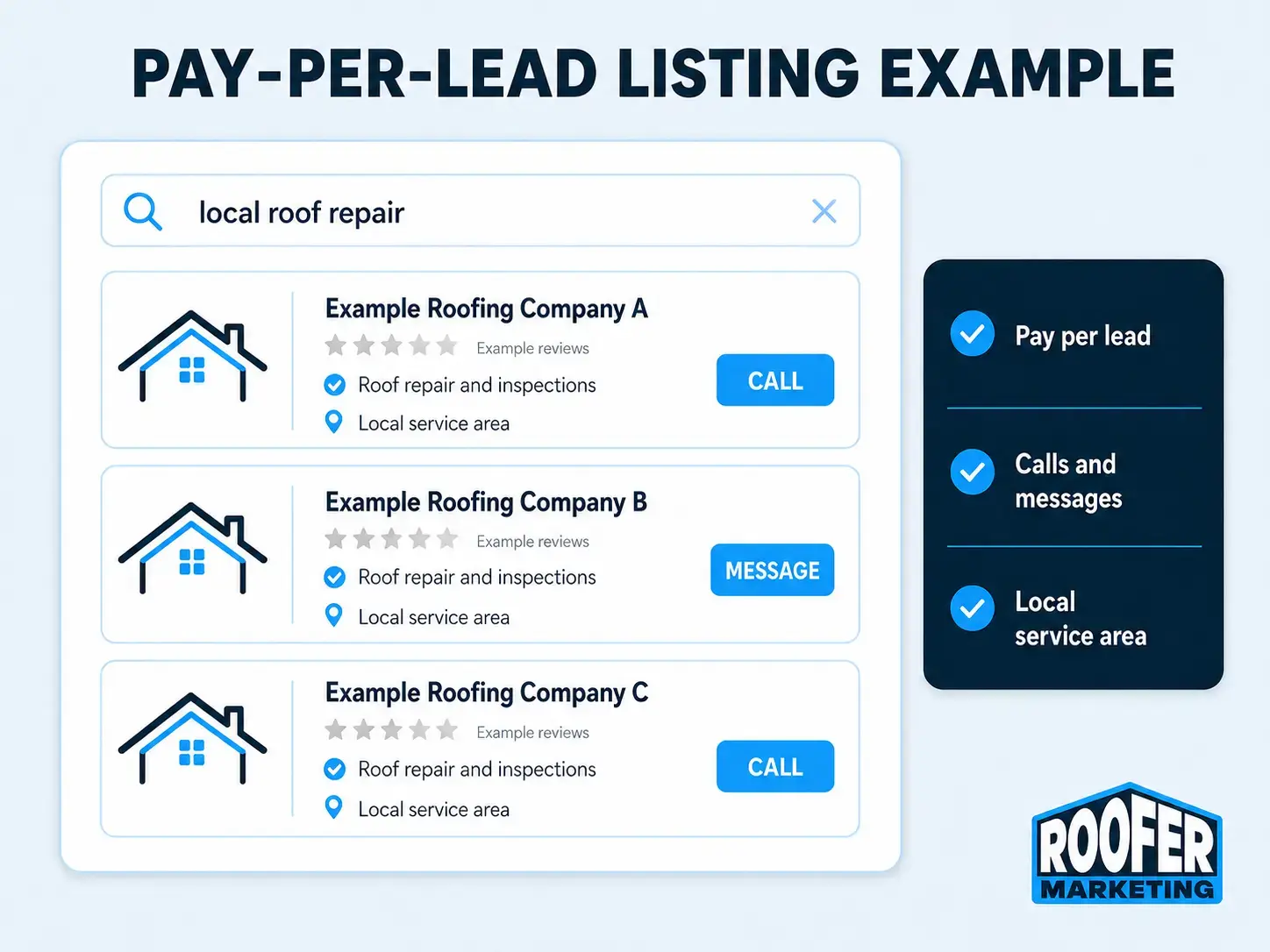
Local Services Ads can appear near the top of local search results when someone looks for a roofer. They’re built around calls and messages, which makes them useful for repair, replacement, and storm-related searches.
In August 2026, Google began moving select U.S. roofing advertisers from Local Services Ads to specialized Performance Max campaigns with pay-per-lead goals. Migrated campaigns still use pay-per-lead pricing and appear only on Google Search and Maps.
Check Google’s migration guide to see whether your account has moved and which dashboard you need to use.
Start with an accurate service area and business schedule. Only advertise during hours when someone can answer or return calls soon. A paid lead loses value fast when the homeowner contacts other roofers before your team responds.
Keep your Google Business Profile up to date. Add your business details, service categories, job photos, and customer reviews.
Google says this information can support local SEO visibility. Its guide to improving local rankings explains the main profile factors.
Ask for a review after a completed job, once the customer has had time to inspect the work. Google provides a review link and QR code that you can add to a text, email, invoice, or leave-behind card.
Track each lead by service, location, appointment status, and final job value. Review call recordings when they’re available to check lead quality.
Local Services Ads work best when the person handling calls knows how to qualify the job. Give them a short checklist. It can cover the location, roof issue, property type, insurance status, timing, and decision-maker.
3. Show finished roofing projects in Facebook and Instagram ads
Social media marketing suits roofing because the work is visual. Before-and-after photos, short job videos, and crew footage help build trust by showing that your team handles roofs like theirs.
Choose one recent project and build an ad around it. Name the neighborhood or city, describe the roofing problem, and show the finished result. Get the owner’s permission before using their home, address, or testimonial.

A project ad could say:
This home in Westfield had missing shingles and water near the rear valley. Our crew replaced the damaged area and matched the existing roof. Book an inspection if your roof took damage in the latest storm.
Keep the targeting within your service area. Platforms like Facebook and Instagram support local audiences. Meta Ads Manager lets advertisers choose who sees an ad and where it appears.
Test 3 types of creative: a before-and-after image, a 15- to 30-second video, and a customer testimonial. Use the same offer and audience for the first test so you can see which format gets more qualified responses.
Lead forms reduce the number of steps between the ad and the inquiry. Ask only for the details your team needs to make contact, such as name, phone number, ZIP code, and roofing issue. Longer forms often reduce submissions before your team gets a chance to qualify the lead.
Measure cost per qualified lead and cost per booked inspection. Likes, views, and comments can help diagnose creative performance, but they don't show whether the campaign produced roofing work.
You can also combine these ads with other channels. See our guide to the best roofing marketing strategies for more ideas used by larger contractors.
4. Prepare storm advertising before bad weather arrives
Storm marketing campaigns need to be ready before hail, wind, or heavy rain hits. Homeowners may seek an inspection within hours. Some will need an emergency repair. Ads built after the storm can miss this early demand.
Create the campaign, ads, landing page, and tracking in advance. Keep the campaign paused and only turn it on when a storm affects your service area. Confirm crew capacity before you turn it on.
Use messages that match the event and avoid fear-based claims. Mention the date, affected area, and type of damage your team can inspect. Don't promise insurance approval, a free roof, or a result that depends on an adjuster.
A storm ad could use this angle:
Hail reached North County on May 14. If your shingles, flashing, or gutters were damaged, schedule a roof inspection with a local roofing team.
Send traffic to a storm-specific page. Explain the signs of damage and the inspection process. Add emergency steps, insurance support, service areas, and expected response times.
Use Google Search ads for people already seeking help. Use Meta ads to reach homeowners in affected areas who may not have checked their roofs yet. Direct mail can follow several days later in neighborhoods where your crews have confirmed damage.
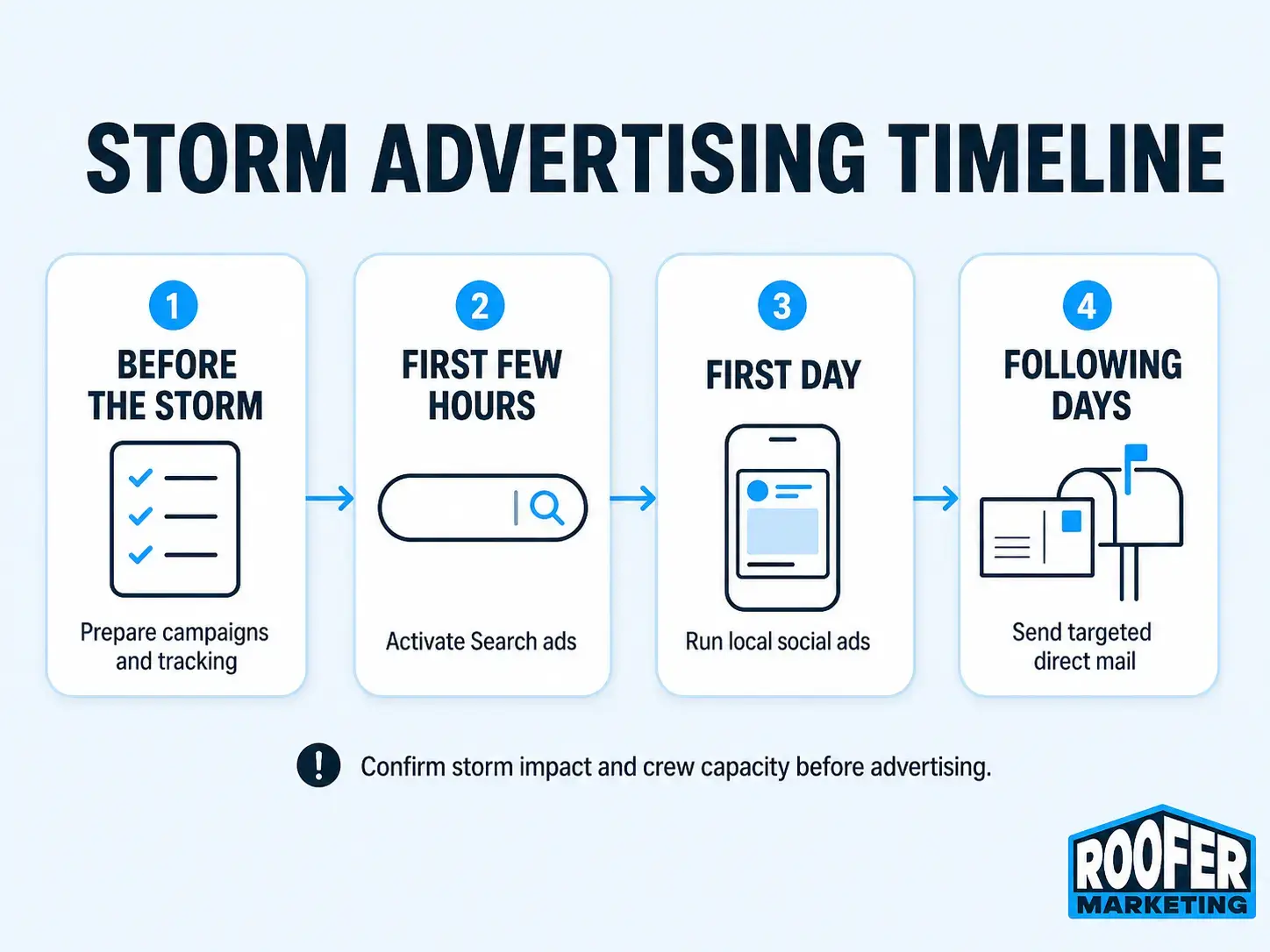
Review lead quality by ZIP code, service type, and storm date. This prevents older or unrelated repair searches from getting grouped with the event campaign.
5. Retarget people who visited your roofing website
Many homeowners compare several contractors before booking an estimate. Retargeting keeps your company visible during that process.
It can reach people who viewed a service or financing page. It can also reach those who left a form unfinished when your tracking and consent settings allow it.
Create audiences based on useful actions. Show roof replacement visitors ads about that service.
Use emergency repair ads for people who viewed the matching page. Remove booked customers from the audience. Keep them only if you run a separate referral or review campaign.
Retargeting ads should give people new information. Share a seasonal checklist or a few roofing tips. These content marketing assets give people another reason to return.
You can also feature recent projects, verified reviews, or details about the inspection process.
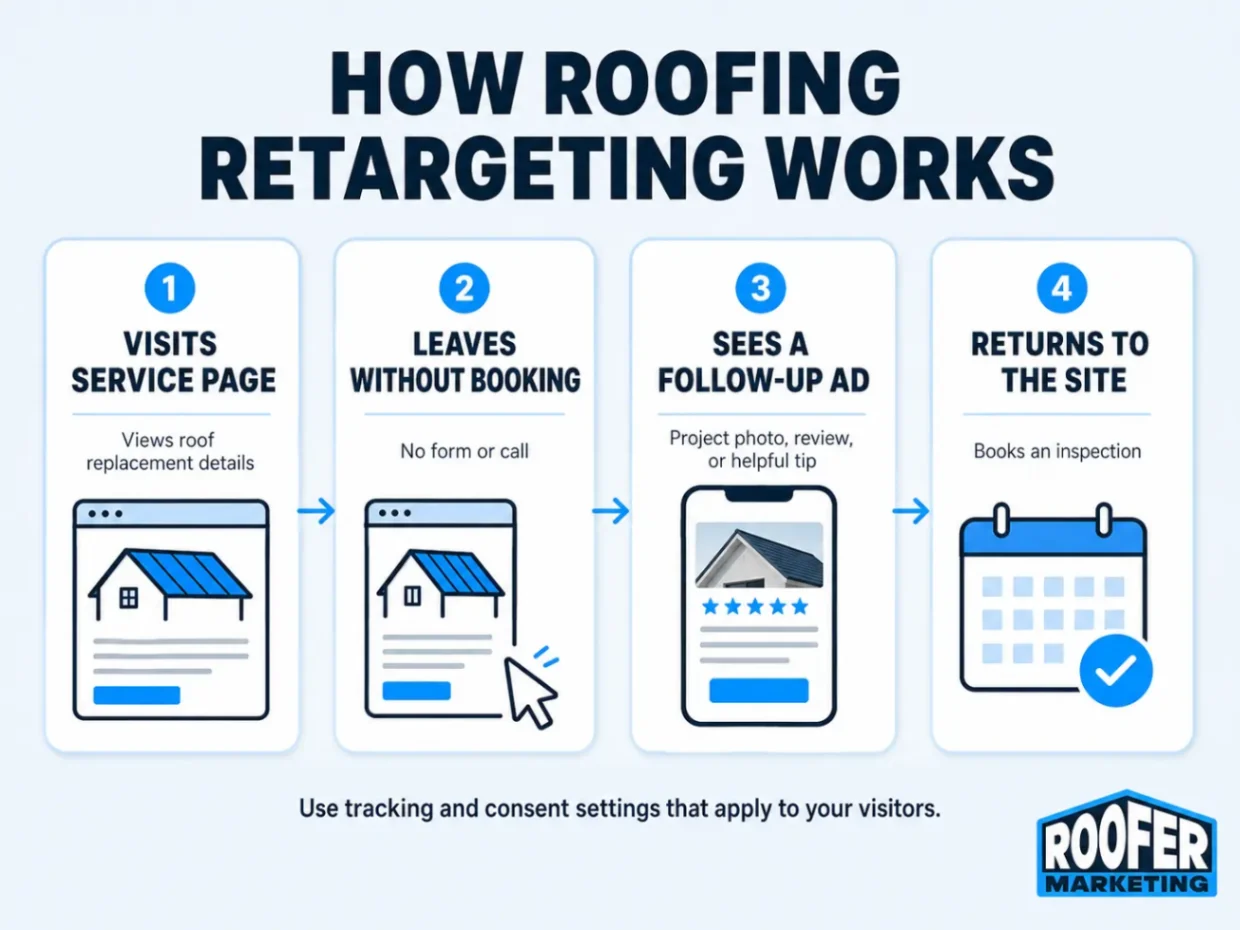
Use a short audience window for urgent services. Someone who needed leak repair 30 days ago has probably already hired a contractor. Use longer windows for roof replacement and commercial roofing audiences. Those decisions often take more time.
Limit how often the same person sees an ad. Repeat views can build recognition. Showing the ad too often can waste money and annoy potential customers.
Track view-through results with care. Give more weight to leads that clicked an ad, returned to the site, called, or submitted a form.
Keep the original lead source in your records. This shows which campaign first brought in the lead.
If you need help retargeting, check our roofing marketing services. We cover paid ads, SEO, landing pages, websites, and lead tracking.
6. Send direct mail to selected neighborhoods
Among the more creative marketing ideas, direct mail works well when you target areas where your team has completed work, where homes are a similar age, or where a recent storm caused damage. It also reaches homeowners who don't spend much time on social platforms.
Use one offer per postcard. You could promote a roof inspection or seasonal maintenance check.
A financing consultation gives readers one next step. A neighborhood project update can do the same.
The front should show a strong project photo and a short headline. Use the back for your service area, review rating, phone number, URL, and QR code. Add a license number when required.
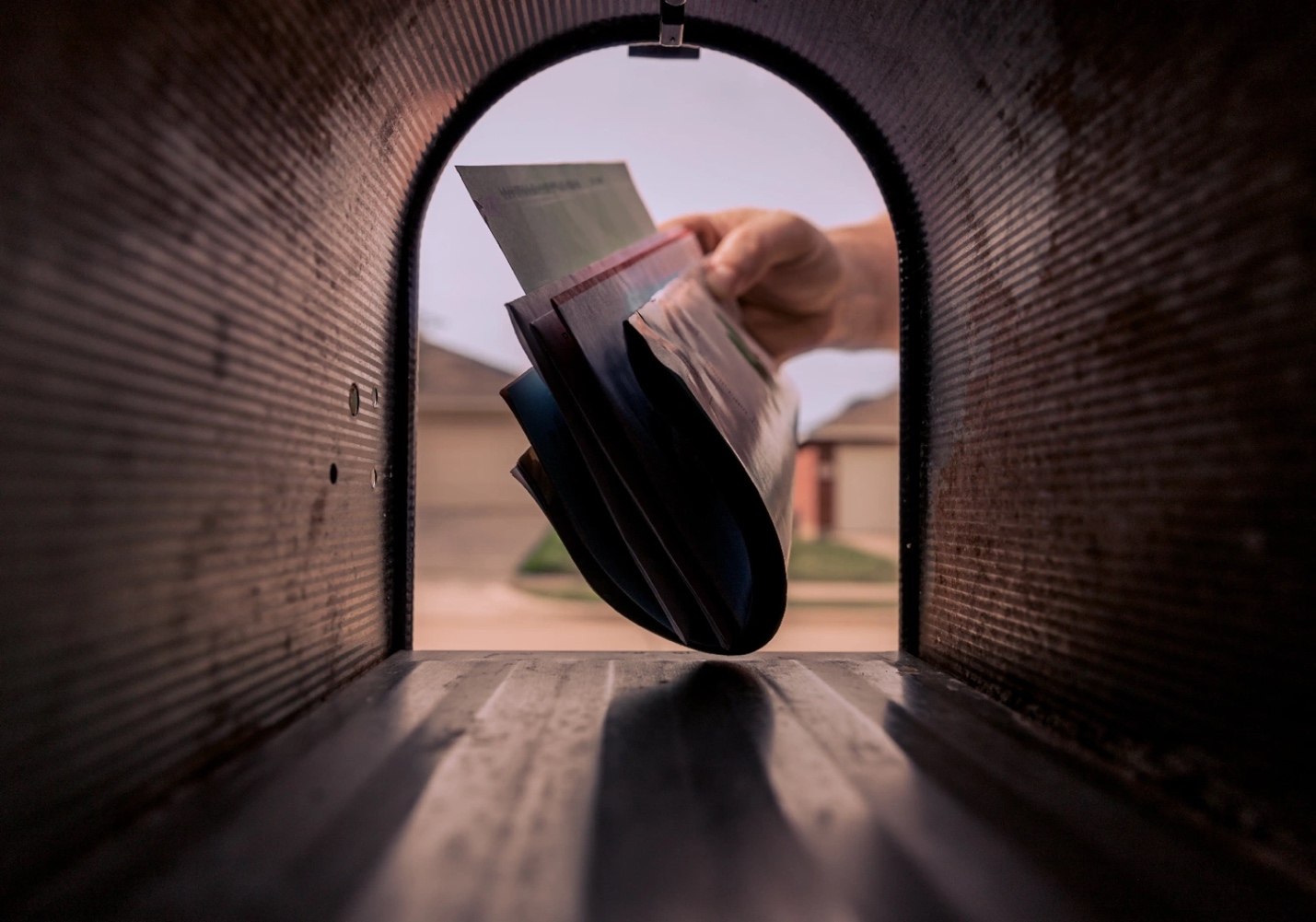
USPS Every Door Direct Mail lets businesses choose carrier routes. Its filters include age, income, and household size. A roofing company can use them to find neighborhoods that match its preferred job types.
Use a dedicated phone number, landing page, QR code, or offer code for each mailing. That makes responses easier to attribute than asking callers how they heard about you.
Test a small group of routes before mailing across the whole service area. Compare delivery cost, responses, inspections, quotes, and signed revenue by route. Keep the design and offer consistent during the first test.
7. Build a referral program with local partners and past customers
Referrals can bring in leads with more trust than a cold ad. The system still needs promotion, follow-up, and tracking to produce work on a regular basis.
Start with past customers. A short email marketing message or text can list your services.
It can also explain who you can help and how to make an introduction. If you offer a reward, check the applicable state laws first. State its value, eligibility rules, and payment timing. Confirm that each participant is allowed to accept it.
Find local businesses that hear about roof problems early. Build referral relationships with them. Start with real estate agents, property managers, home inspectors, and insurance agents.
Solar and gutter companies may hear about roof problems. Restoration firms may also meet owners who need a roofer.
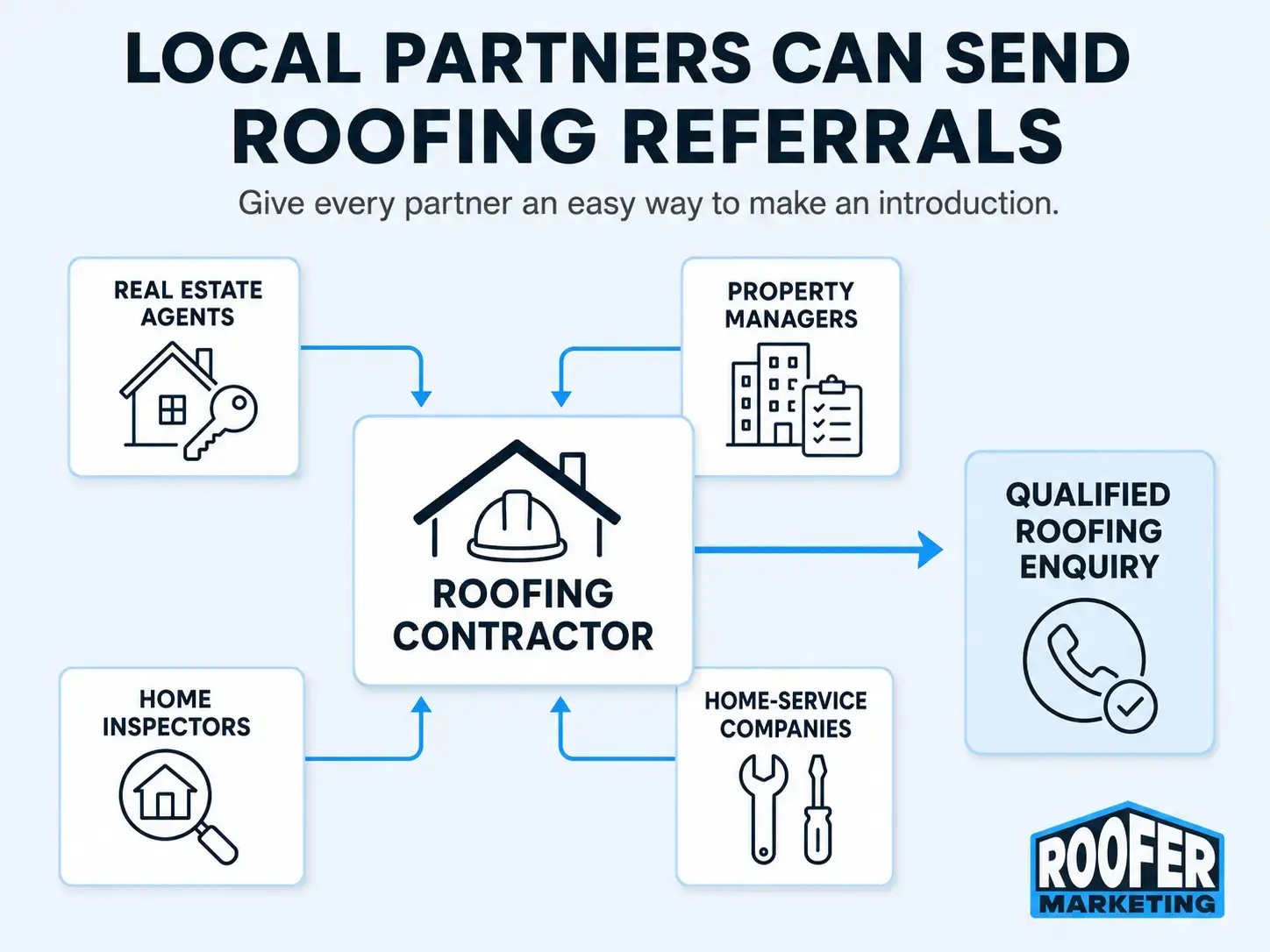
Give each partner an easy way to refer someone. Offer a dedicated form, tracked phone number, or partner code. These options are easier to remember than a general website address.
Your partner message should explain your service area, ideal job types, response times, and referral process. Don't ask partners to make claims about pricing, insurance coverage, or warranties that your team hasn't approved.
Review referrals by source, qualified lead rate, estimate rate, close rate, and revenue. Thank partners for introductions, update them when appropriate, and pay any promised reward on time.
Choose the first advertising ideas to test
As you compare roofing marketing strategies, start with the channels closest to active demand. Google Search ads and Local Services Ads often belong near the top. They reach people who are already looking for a roofer.
The best roofing advertising ideas are the ones your team can run and measure. Start with 1 or 2 campaigns. Collect enough lead data to judge them, then expand the campaigns that produce booked work.
If you want to grow your roofing business, our team can help you choose, build, and track the right campaigns for your market. Get in touch with us today and get a plan that can help you grow your business without adding more work to your week.
